WARM-UP
It is important to warm up before taking part in any sport or performance. It is recommended to perform a general warm up of around five minutes (to increase heart rate, body temperature, blood flow and breathing rate) followed by static stretches of all areas of the body.
A good warm up schedule could include:
* Jogging in place or jogging stairs
* Jumping rope
* Bench stepping
* Slide board
* Jumping jacks
Followed by specific warm-ups geared towards the activity you are about to perform (i.e. Ice Skating!)
* Ankle bounces and double-arm swings
* Double-leg lateral jumps
* Single-leg skip bounds
* Trunk/torso rotations
* Dry land rotational jumps: ¼ turns, singles, axels, doubles, triples
* Footwork drills
Ending with static stretches
* Neck
* Quadriceps
* Chest
* Hamstrings
* Upper & Lower back
* Hip Flexors
* Sides of the Torso
* Groin
* Shoulders
* Hip Abductors (outer thigh)
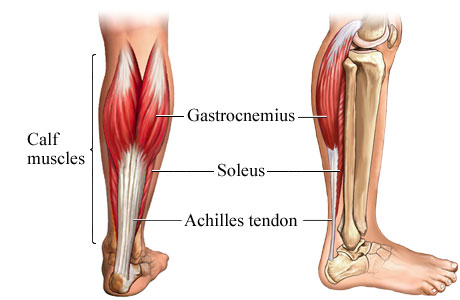
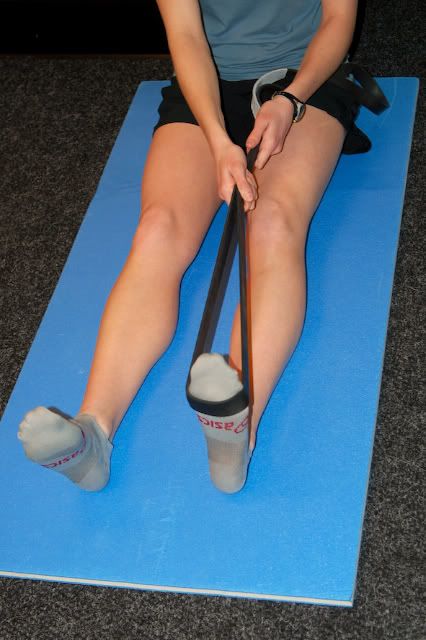
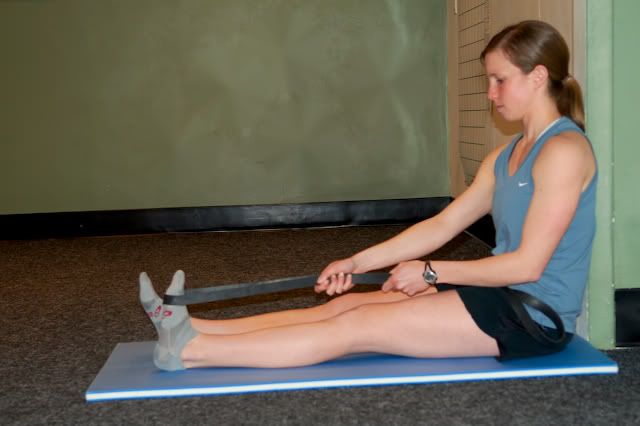
* Calf & Achilles
* Hip Adductors (inner thigh)
COOL DOWN
It is equally important to cool down after performing a sport or activity to give your body time to recover from strenuous exercise and prevent lactic acid build up in muscles.
A recommended cool down should include
* Slow jogging (or other light aerobic exercise) gradually decreasing speed and intensity to reduce heart rate
* Total body stretching
FLEXIBILITY & STRETCHING
Flexibility is defined as the ability of a muscle to lengthen without injury. Figure skaters need to train their muscles to be more flexible for a variety of reasons: Flexibility adds to the aesthetic appeal of long lines and extensions such as spirals, lay backs, various sit spin positions and extensions on landings and stroking. Also, when a skater takes a hard fall an injury occurs in the muscle or other soft tissue because a muscle is stretched beyond its “end point”. The purpose of training muscles to be more flexible is to:
* Increase the range of motion
* Reduce muscle tension
* Increase the level of certain skills and muscular efficiency
* Reduce the severity or prevent injuries
* Improve body alignment and muscular symmetry
* Delay the onset of muscle fatigue and prevention of muscle soreness after training
* Promote mental relaxation and help the mind to take control of the body
Regular stretching can aid in alleviating muscle imbalances, injury prevention or reduce the severity of injuries.
Areas of the body that are generally tight for figure skaters are: lower back, hamstrings, calf and Achilles tendon, hip flexors, quadriceps, and groin. In addition to stretching these specific areas, stretches for the chest, upper back and shoulder area are also appropriate. It is important that these areas be stretched frequently.
Types of Stretches:
There are several different types of stretches that you can practice, and it is important to know the types of stretches in order to choose the right type of stretch to perform.
Passive – usually performed with assistance (towel or partner) The stretch must be performed slowly in order to prevent injuries due to forceful manipulation of the body part.
Static – Recommended type of stretching: can be performed alone and refers to when a muscle is slowly lengthened to its “end point”, held for 15-30 seconds and repeated three to five times. Slowly “creep” further into the stretch as the tension in the muscle begins to relax. Researchers have demonstrated that permanent lengthening is achieved when static stretching is performed slowly, at lower force and for longer duration while the core body temperature is elevated.
Ballistic – Generally not recommended: “bouncing” a stretch beyond the end point. This is likely to initiate the stretch reflex (a nerve response that tells the muscle to contract if it is overstretched) and can cause injury or strain
Dynamic or Functional – the ability to use a range of joint movement for a particular movement within sport or physical activity. These movements are performed either slowly or rapidly. Dynamic or Functional stretching is considered a type of ballistic stretch and caution should be used when performing this type of stretch. A warm-up is recommended before stretching and then progress to static stretching before attempting any dynamic type of stretching.
Using Proper Technique:
Always use proper technique in flexibility training. Warm up to prepare your muscles and joints before stretching. Your warm-up needs to be at least five minutes to increase body temperature to the point where you begin to sweat.
As you stretch, concentrate on the area of your body that is being stretched in order to develop body awareness. Concentrating on the stretch will also help in allowing the muscles to relax and lengthen during your stretching. Hold each stretch for 15 to 30 seconds, release slightly, and repeat the stretch three to five times. The beginning of a stretch might feel comfortably uncomfortable. This is called the “end point” of a stretch and you should not force the muscle to stretch beyond the end point. However, as you hold the stretch, the tension in the muscle should ease a bit. At this time you can ease a bit further into the stretch to lengthen the muscle a little more. By holding the stretch until the tension eases, you can develop a new end point in the stretching muscle, thus safely stretching further.
Breathing should be slow and rhythmical. Inhale at the beginning of the stretch and exhale going into the stretch position. Breathe slowly and relax while holding the stretch.
A stretch should not be painful.
It is recommended that you stretch after each warm-up, after each workout and after each skating session.
Researchers recommend that you practice static stretches so your muscles can relax and the stretch can be sustained. During static stretching it is a good time to relax, breath deeply, concentrate on the muscles being stretched, how your body feels and to have quiet time for yourself.